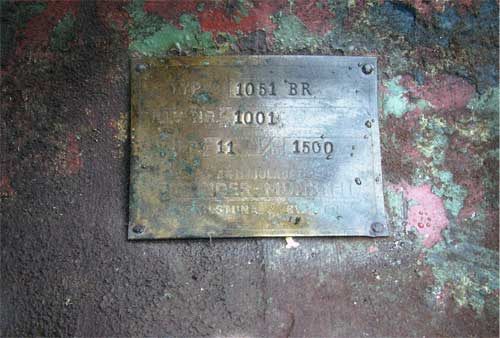
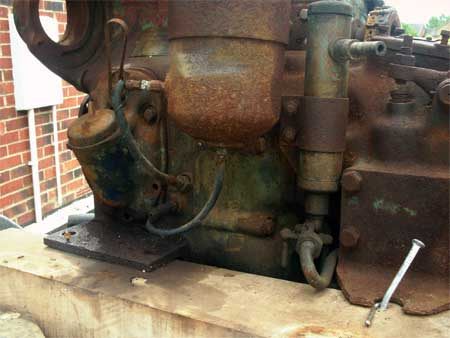
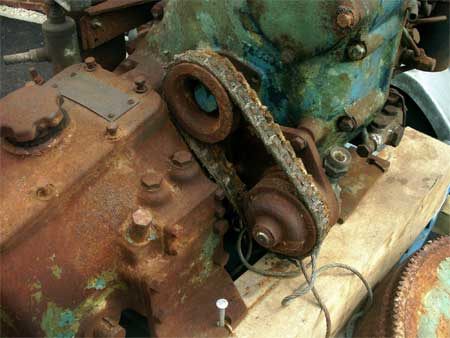
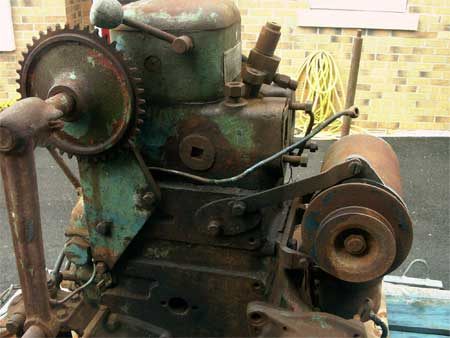
A wing engine is a spare power unit mounted to one side of a fishing boat. If the main engine fails, or a net or cable fouls the propeller, the wing engine — with its own shaft and propeller — can motor the boat out of trouble. The Bolinder 1051 that later became the subject of the 1001 dismantle sequence arrived as exactly that: a complete but tired wing engine, rescued from a Gloucester barn.
How it was found
In July 2003 Waterways World published an article on semi-diesel Bolinders that also mentioned the later 1051–1054 four-stroke series and gave a contact: John Pattle, a busy boat-yard owner and acknowledged expert on these motors. Through him Bob was put in touch with Terry in Gloucester, who had bought a 1053 for his own boat but had been obliged to take a 1051 as part of the deal. Terry later acquired a Gardner, used only the hydraulic gearbox from the 1053, and sold that engine on. Both the 1053 and the 1051 had come out of a fishing boat — the 1053 as main engine, the 1051 as the wing engine with its own shaft and propeller for emergency use.
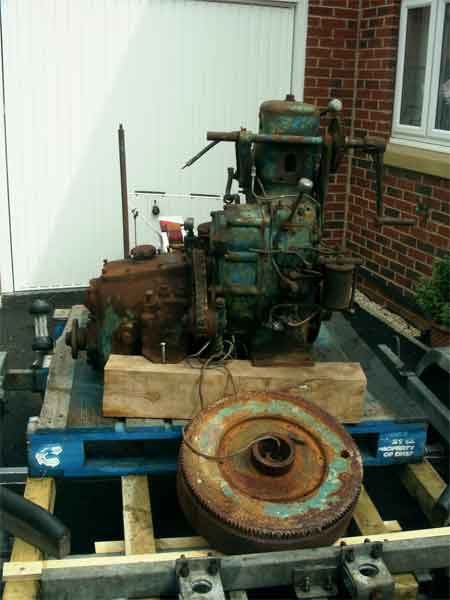
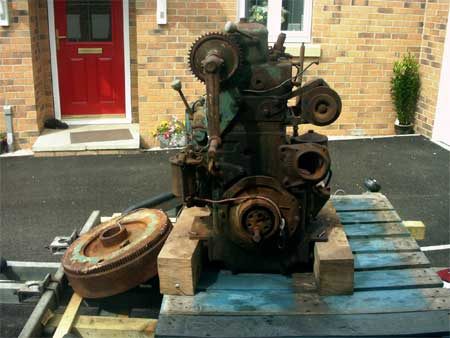
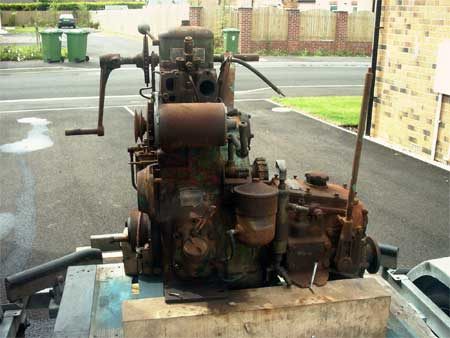
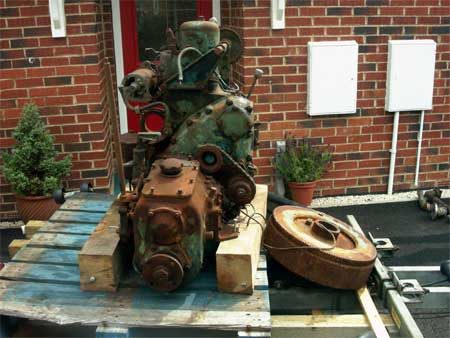
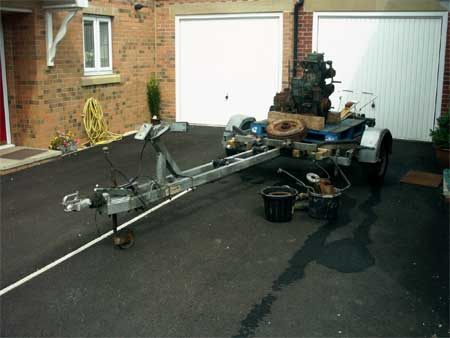
Bob borrowed a boat trailer, fitted it to carry a pallet, and drove to Gloucester. With the help of a tractor forward loader and a negotiated price he became the owner of a complete but worn set of spares. The motor had already been partially stripped for inspection some years earlier. The cylinder had been left full of diesel to protect the bore; the rest of the engine was a mixture of preservative oil and sawdust from the surrounding wood mill.
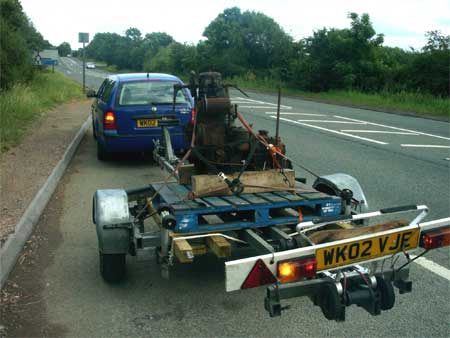
Homecoming
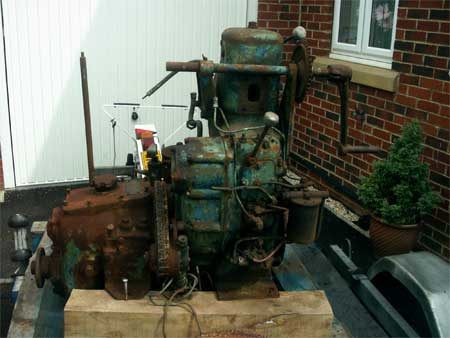
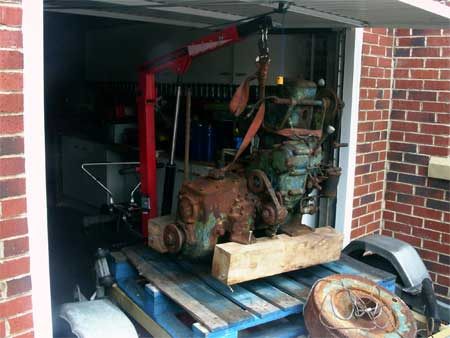
Two trips to the weighbridge put the complete unit at about 600 kg. Fifteen minutes with a hired engine hoist settled it on a raised pallet in the garage. The family verdict was recorded with typical candour: “IS THAT IT??? You actually PAID MONEY for THAT!” — a reaction that sits comfortably alongside the affection already reserved for the other Bolinder “popping along blowing smoke rings.”
Purpose
The practical aim was clear: strip the barn-find 1051 (engine No. 1001), recover or remanufacture crankshaft, big-end and main bearings, and use the better components to put Andora’s noisier, low-oil-pressure 1051 right — ideally finishing with two serviceable single-cylinder motors rather than one worn unit and a scrap heap.
The photographic dismantle that followed is told on the companion page — this page is the arrival of the engine, not a second workshop sequence.
Related reading
- Andora — the boat that needed the parts
- 1051 No. 1001 dismantle — workshop sequence
- Manuals — 1051 parts catalogue and instruction book (PDF)
- Models: 1051