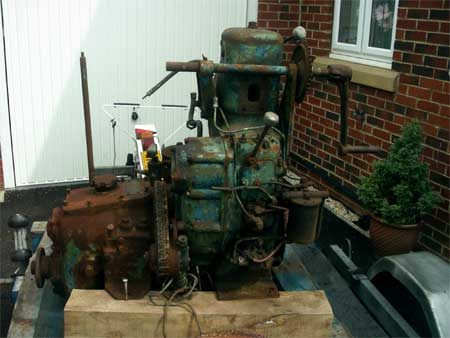
In the early 2000s Bob Tidy needed bearings and pattern parts for the Bolinder 1051 in Andora. The boat’s engine still ran, but oil pressure was low and mechanical noise suggested worn mains and big-end bearings. A contact chain that began with a Waterways World article and John Pattle led to a complete but tired 1051 in a Gloucester barn — engine number 1001, formerly a wing engine from a fishing boat.
As found
The motor had been partially stripped for inspection years earlier. The cylinder was left full of diesel to protect the bore; the rest was a mixture of preservative oil and sawdust from the surrounding wood mill. Two trips to the weighbridge put the complete unit at about 600 kg. An engine hoist from the local hire shop lifted it onto a raised pallet in the garage.
Family reaction, recorded with typical candour on the original site: “IS THAT IT??? You actually PAID MONEY for THAT!”
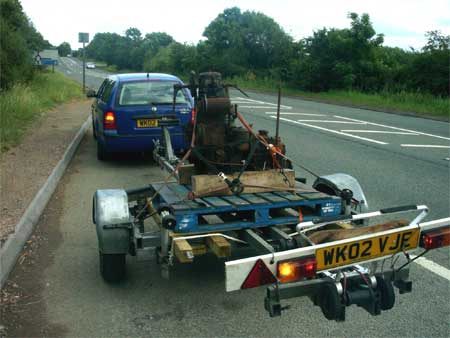
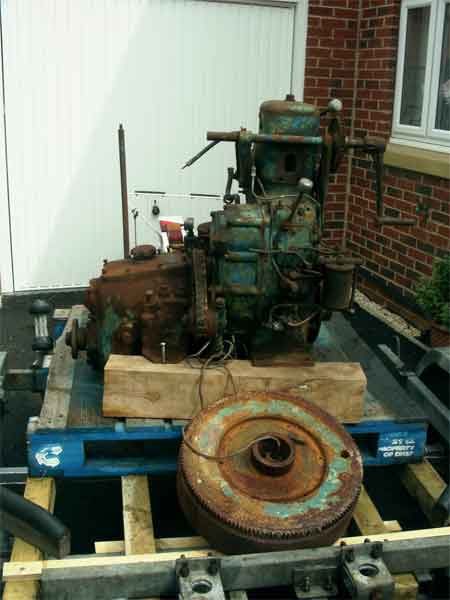
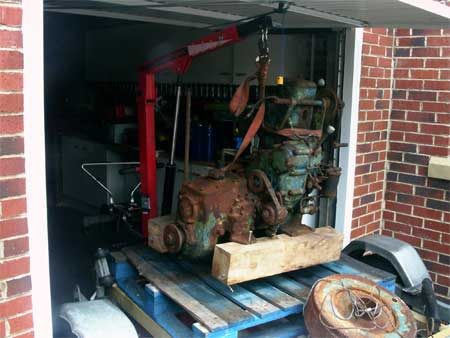
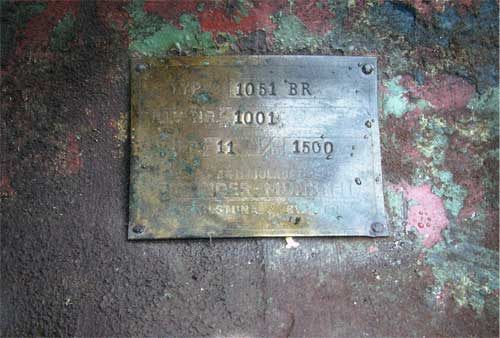
The identification plate number is noticeably shorter than Andora’s 1537 1077 — useful context when comparing the two engines. Flywheel and hand-start gear had already been removed before the modern strip continued.
Purpose of the strip
The plan was practical rather than museum restoration: strip 1001, recover or remanufacture crankshaft, big-end and main bearings, and use the better components to put Andora’s engine right — ideally finishing with two serviceable 1051s rather than one worn unit and a scrap heap. The original site’s wider purpose was partly to gather enough owners to make unobtainable parts viable again; shell bearings can be remanufactured once a pattern exists.
First inspection — main housing and big-end
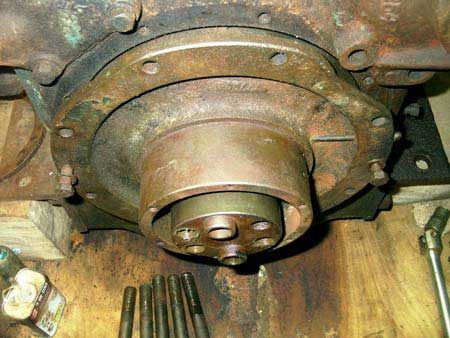
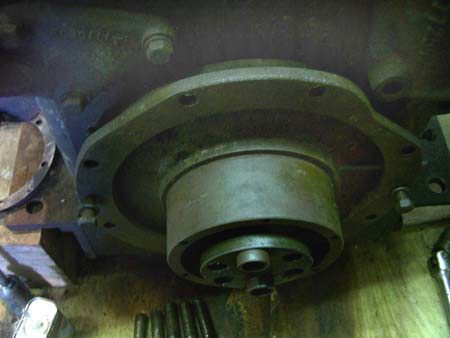
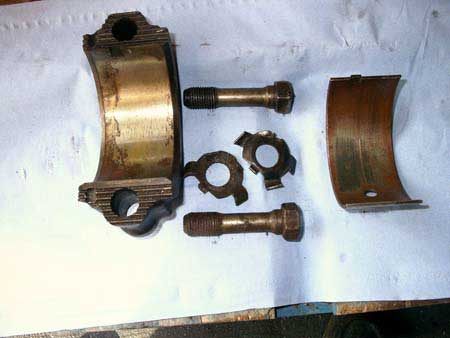
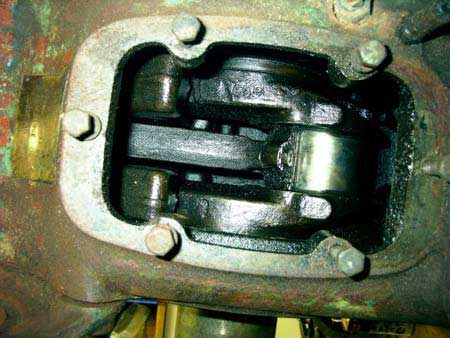
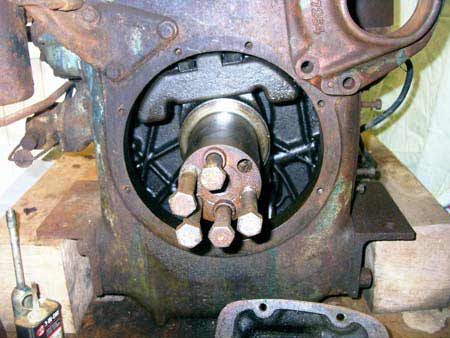
The main bearing housing was eased out using the spare threaded holes as jacking points. The big-end white-metal bearing was almost gone and scored; the journal looked likely oval. Opening the crankcase showed the remaining flywheel securing bolts and the general condition of the lower end.
Head, bore and stuck piston
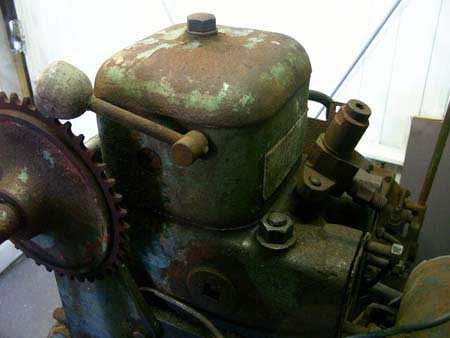
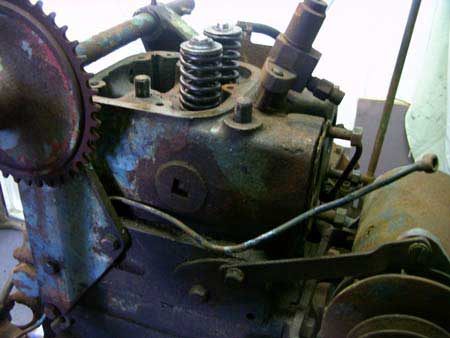
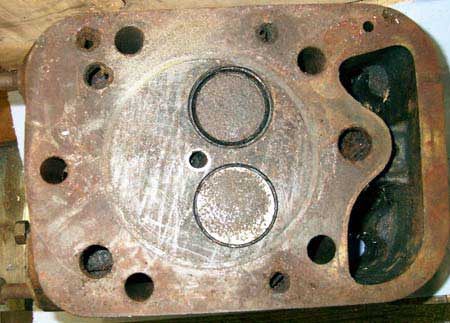
With the rocker box and head off, the head interior showed an undersize-looking valve and waterways partially blocked by rust debris — a possible contributor to overheating in earlier life. The bore itself was in good condition and still full of diesel; the piston was stuck, possibly seized.
Gearbox, pumps and timing side
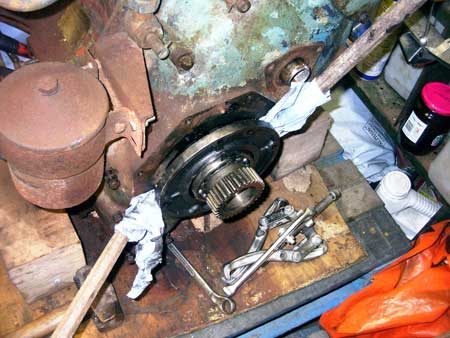
The engine was separated from the gearbox (sixteen bolts). Planetary reverse gears were visible on the input side. Water-pump drive pulley and crankshaft output were exposed; early attempts used a three-legged puller. The diesel filter (Crossland 483) and pipework came off for access. Injection pump and governor were removed as a unit — cams and followers looked in good condition, with the oil-pressure relief valve visible behind the large cast cam wheel.
Deeper strip
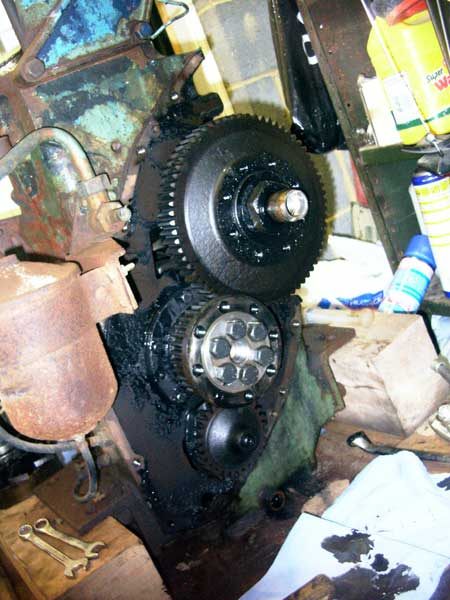
Further work reached the timing-side cover and a heavily engineered camshaft timing gear (possibly used as a half-speed power take-off on some stationary applications). Output-shaft components parted with a drift; the oil pump was removed from the crankcase. The main bearing housing on the opposite end showed visible wear on the flywheel-end main journal. The piston remained stuck despite diesel soak, heat and cold.
A workshop caution from the original notes: forcing a cast plate is not recommended. The published archive sequence ends at “To Be Continued.” This page records a documented inspection and partial dismantle, not a completed rebuild.
Related reading
- Labour of Love — how this wing engine was found and brought home
- Andora — the narrowboat whose 1051 this strip was meant to support
- Models: 1051 — family overview
- Manuals — instruction book, 1051 parts catalogue, and 1051–1052 gearbox plates